Tek Screws for Different Applications: Top Uses and Benefits
Tek screws, also referred to as or known as self-drilling screws, are designed for different applications. Tek screws feature a drilling bit that carves a hole through metal substrates, allowing the threads to subsequently pass through to join or fasten materials together. The invention of the Tek screws eliminates the need for pre-drilling pilot holes, making the job faster and more efficient.
BDN Fasteners offers a variety of Tek screws for different applications, with each type’s intended purpose and benefits listed below:
Crest Fixing Tek Screws
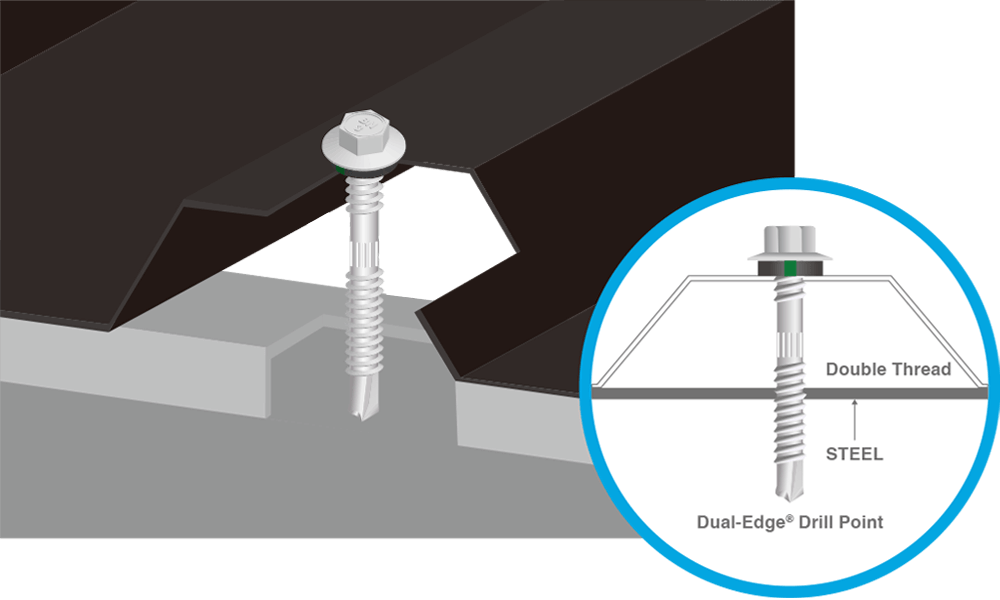
For fixing steel sheets at the crest onto steel substrates, purlins, or rafters below, crest fixing on rooftops is crucial. This is because, due to gravity, water and debris always move toward the lowest point. Screws with a #12 diameter or larger are typically used, as they provide better strength and support for rooftops applications.
Cladding to Metal Tek Screws
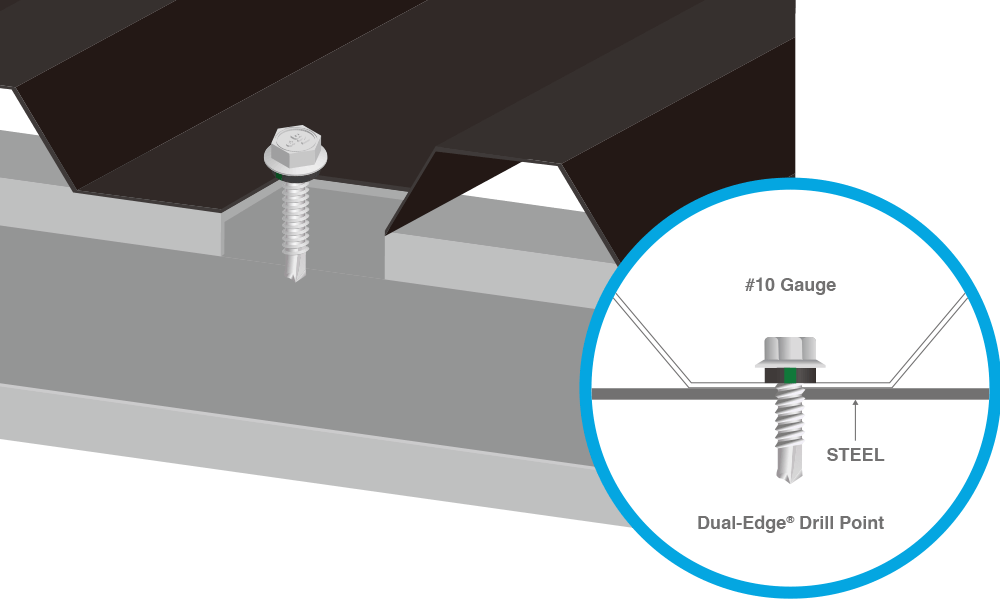
Cladding or wall curtain profiles are usually affixed to thinner purlins or substrates; therefore, smaller-gauge screws, normally #10 screws are sufficient. Wall curtains and claddings are normally fixed at corrugation valleys, where shorter screws are required.
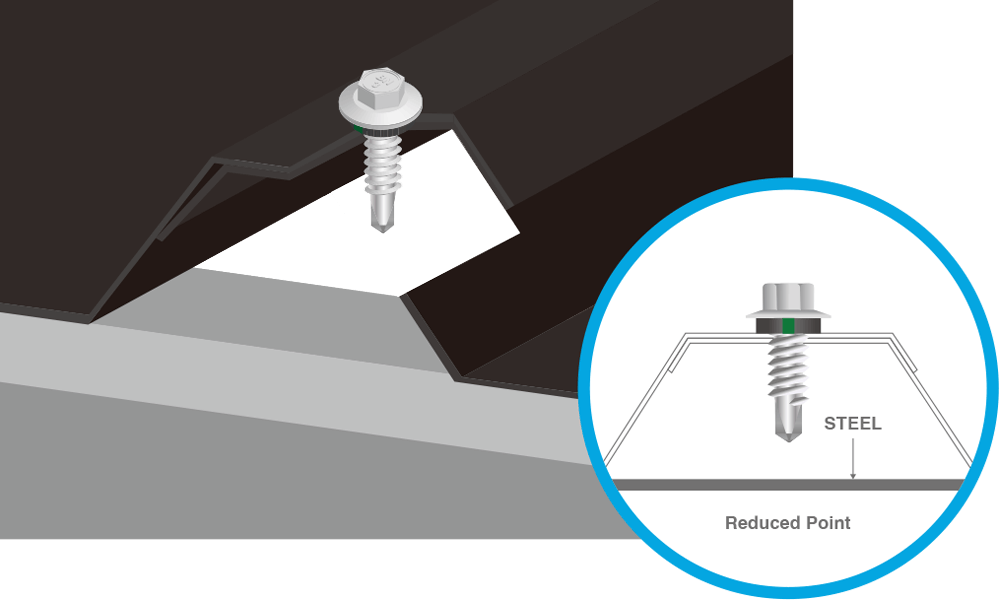
Stitching Tek Screws
Stitching Tek screws are normally used on lightweight panels for side-lap or end-lap connections in light-gauge steel. These screws feature a reduced, thunder-shot drilling point that helps prevent thread stripping. When paired with our proprietary harpoon threads, they provide enhanced pull-out strength.
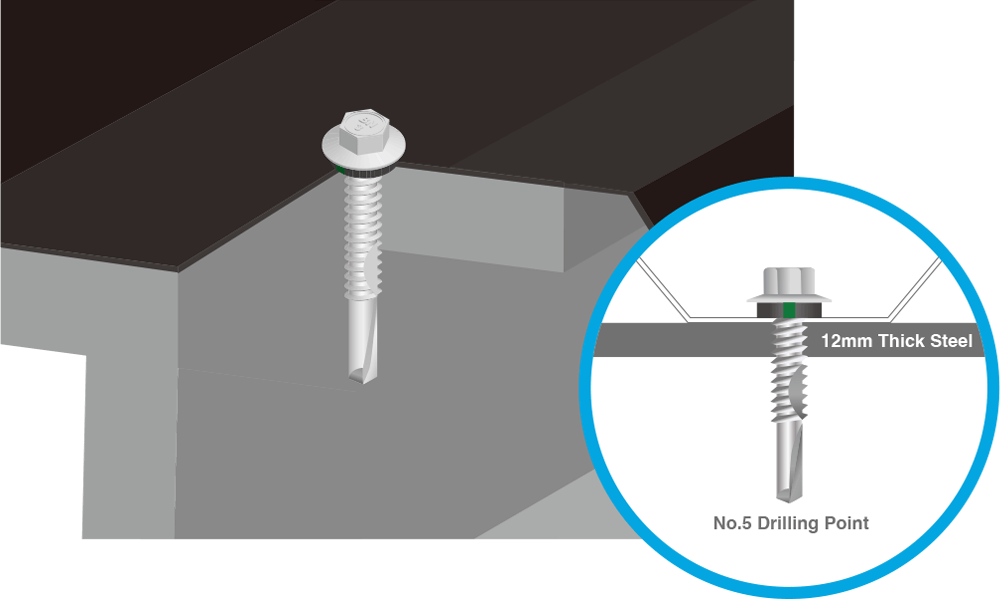
Heavy Duty Thick Steel Tek Screws
Our heavy-duty Tek screws feature a patented Thunder-Shot drilling point that prevents wandering, efficiently carves through steel, and clears swarf with ease—capable of drilling through up to 12.5mm thick steel.
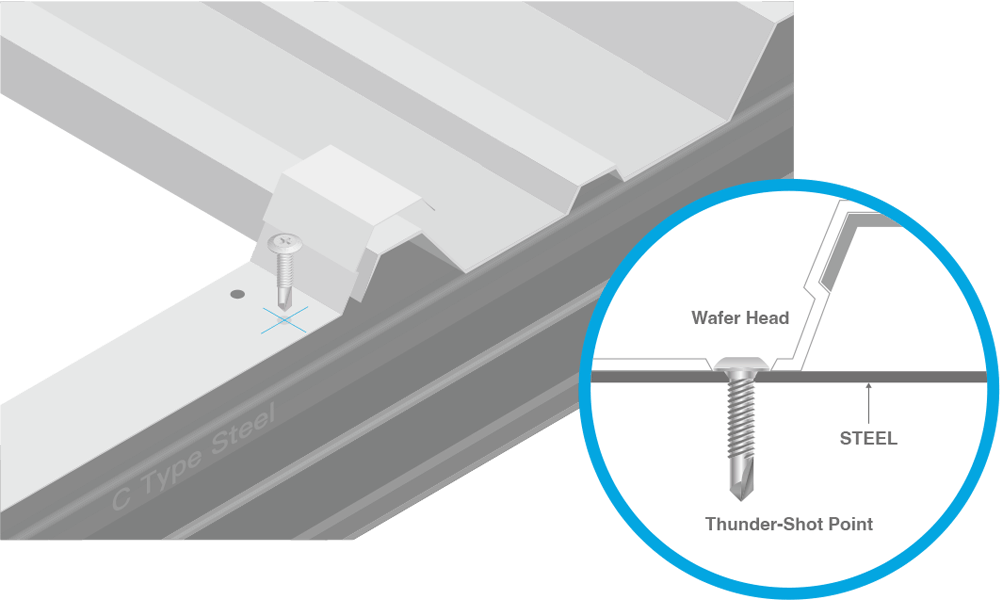
Concealed Fixing Tek Screws
BDN’s wafer head concealed-fixing Tek screws not only have a low profile themselves, but also retain their low profile after installation, creating an aesthetically pleasing flat surface without any protrusions that could cause interference.
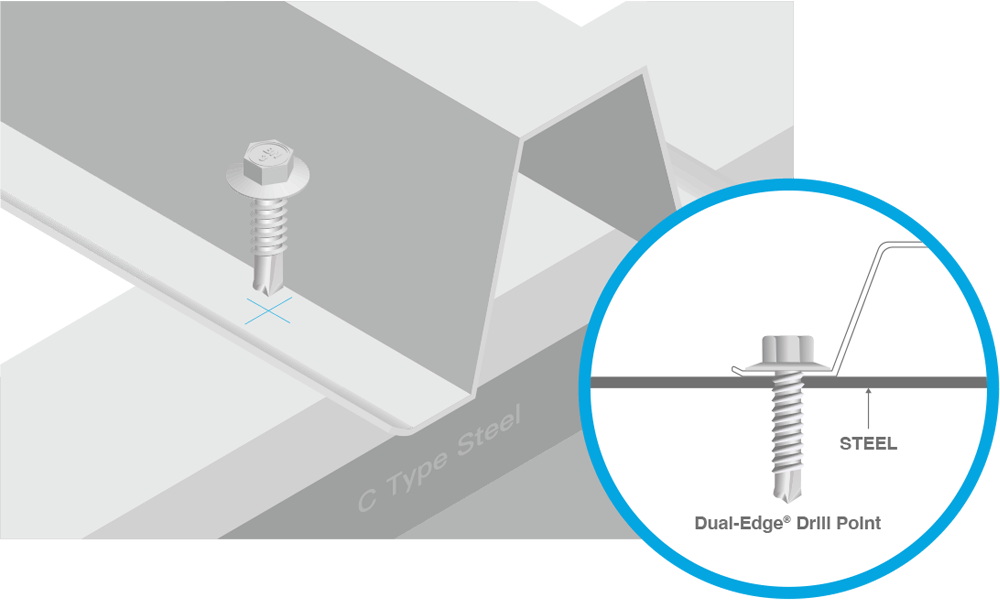
Truss to Plate Connection Tek Screws
BDN’s METAL-Tite truss-to-plate connection fasteners are designed for high pull-out strength and paired with our patented Trident drilling point—the ultimate choice for fixing steel trusses to steel plates or beams with thicknesses ranging from 0.75 mm to 1.6 mm.
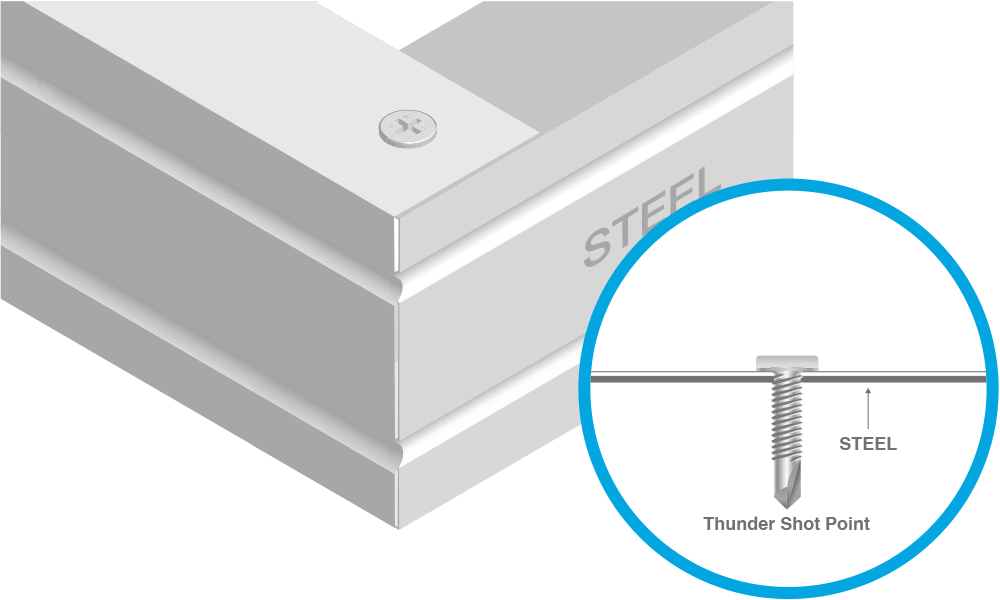
Frame Fixing Tek Screws
Our Frame-Fixing Tek Screws are designed for stud-to-plate or plate-to-lintel connections without pre-punched holes. Serrations under the head provide additional grip and prevent the screw from spinning during installation.
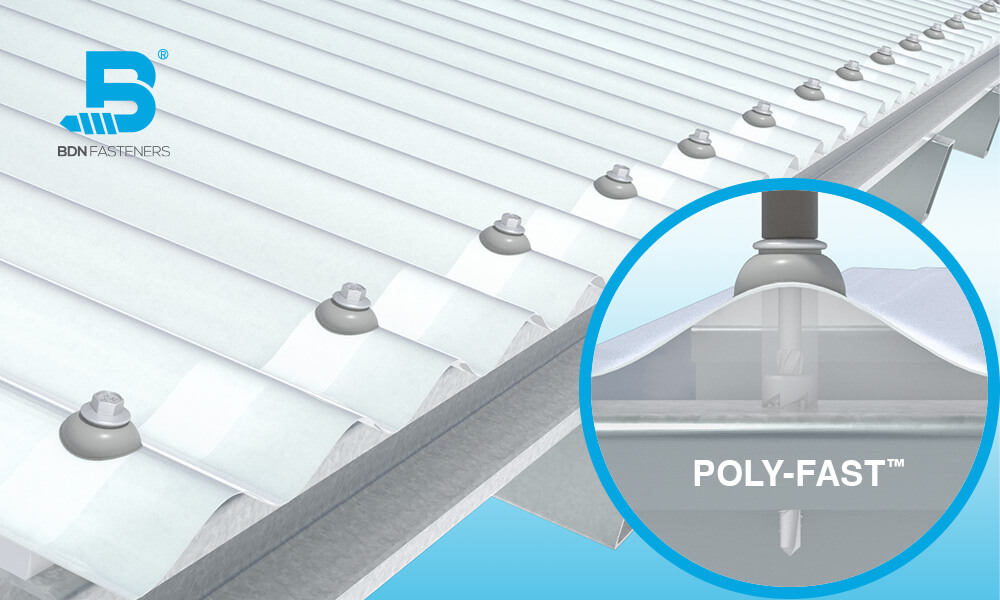
Plastic Skylight Tek Screws
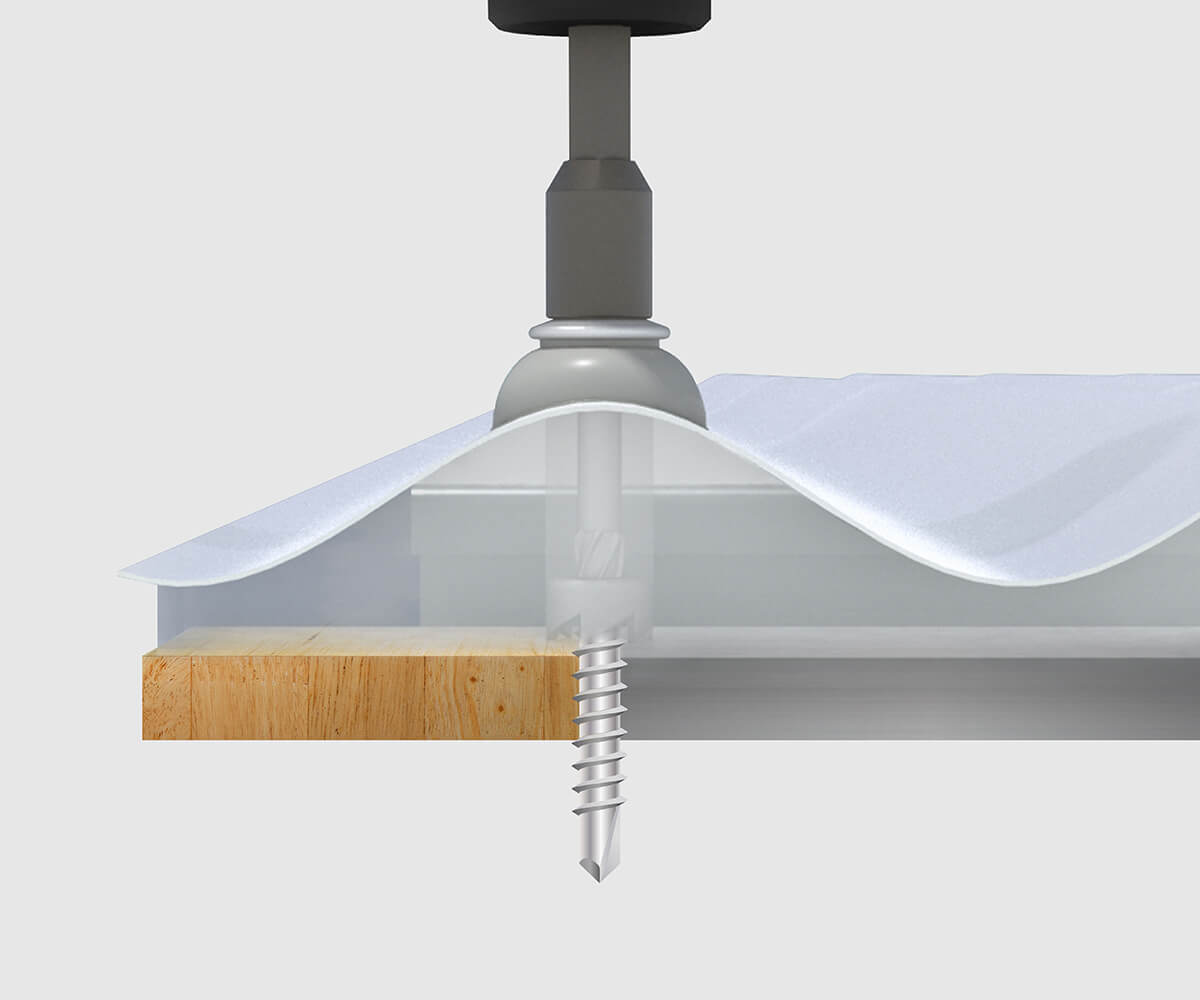
The BDN POLY-FAST skylight Tek screw creates an 11 mm thermal expansion hole and securely fastens polycarbonate skylights sheets to steel or timber purlins in a single step.
Additional features, such as the Depth-Stop Knurls, work in conjunction with the expansion-hole cutter to act as a stopper, preventing overdriving and deformation of the skylight sheets.
Tek Screws FAQ: What They Are and How to Use Them
Q1: What is a Tek screw?
A Tek screw, also known as a self-drilling screw, is a type of fastener that combines the functions of drilling, tapping, and fastening in one operation. It features a drill-shaped point that allows it to cut through materials such as steel, aluminum, or wood without the need for a pilot hole.
Tek screws are widely used in metal roofing, cladding, and light steel construction because they offer quick installation and a secure, long-lasting hold.
Q2: What does TEK stand for in screws?
The term “TEK” refers to a brand originally developed by the Buildex® company in the 1960s. The name “TEK” became synonymous with self-drilling screws due to its innovative drill-point design.
Over time, “Tek screw” evolved from a trademark into a general term used across the industry to describe screws with self-drilling tips.
Q3: Do you need to pre-drill for Tek screws?
In most cases, you do not need to pre-drill holes when using Tek screws. Their self-drilling point is designed to pierce and drill through metal or timber in a single step, eliminating the need for separate drilling and fastening.
However, when working with particularly thick steel—typically above 12 mm—it may be advisable to pre-drill a pilot hole to ensure precise alignment and avoid excessive stress on the screw or drill bit.
Q4: Why are they called Tek screws?
Tek screws take their name from the original TEK® brand of self-drilling fasteners produced by Buildex. The name became popular because these screws simplified construction by combining drilling, tapping, and fastening into one process.
Today, the term “Tek screw” is used generically to refer to any screw with a self-drilling tip, regardless of the manufacturer.
Q5: How do you install Tek screws?
To install a Tek screw, use a power drill or an impact driver fitted with the correct hex or Phillips bit. Position the screw perpendicular to the surface, apply steady pressure, and let the drill point cut through the material. Once the drilling tip penetrates, the threads will engage automatically, pulling the screw tight.
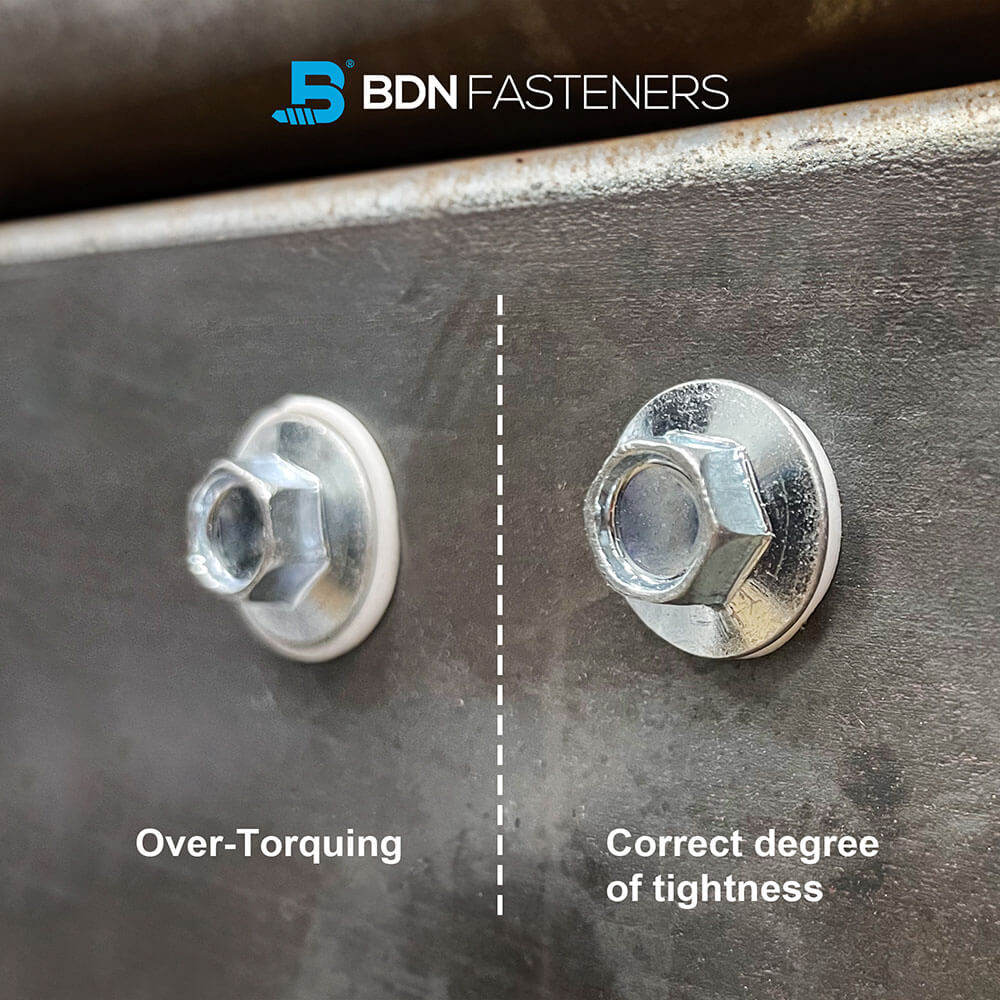
Avoid overdriving, as excessive torque may strip the threads or deform the material. For best results, ensure you use the appropriate screw size and washer type for the material and application.
For more information on the type of BDN Fasteners Tek screws for different applications, top uses and benefits, please contact us.
Related Articles:
Tek Screws Sizes and Diameter: A Guide to Choosing the Right Fit
Are screws recyclable? Two stages of screw recycling process