Is Zinc Plating Rust Proof? Exploring the Benefits of Zinc Plating.
As a screw manufacturer that produce countless screws for major screw brand around the globe which also happen to manage our own BDN Fasteners brand, one of the most asked questions wherever we go is – Is Zinc plating Rust Proof. Believe it or not, before we answer this question, we always ask – under what circumstance?
Self-drilling screws live at the intersection of mechanics, metallurgy, and jobsite reality. They are expected to drill, form threads (tapping), clamp or join materials, and remain serviceable for years while exposed to moisture, salts, industrial fallout, thermal cycling, and galvanic interactions with the substrates they fasten. Surface treatment, oftentimes loosely described in layman’s term as “coating”, serves a purpose that is more than just cosmetics.
Among the most common surface treatments is electroplated zinc or zinc plating in short. It is widely used because it is economical and provides sacrificial corrosion protection on carbon steel.
However, modern building envelopes and external applications increasingly demand corrosion systems that go well beyond conventional zinc plating, particularly where standards such as Australian AS 3566 define corrosion-resistance classes and verification methods. In parallel, higher-performance systems such as mechanical zinc (including zinc-tin mechanical plating to AS3566 Standards) and zinc-aluminum flake / ceramic topcoat systems (commonly branded Ruspert®, are chosen to meet tougher environmental exposures.
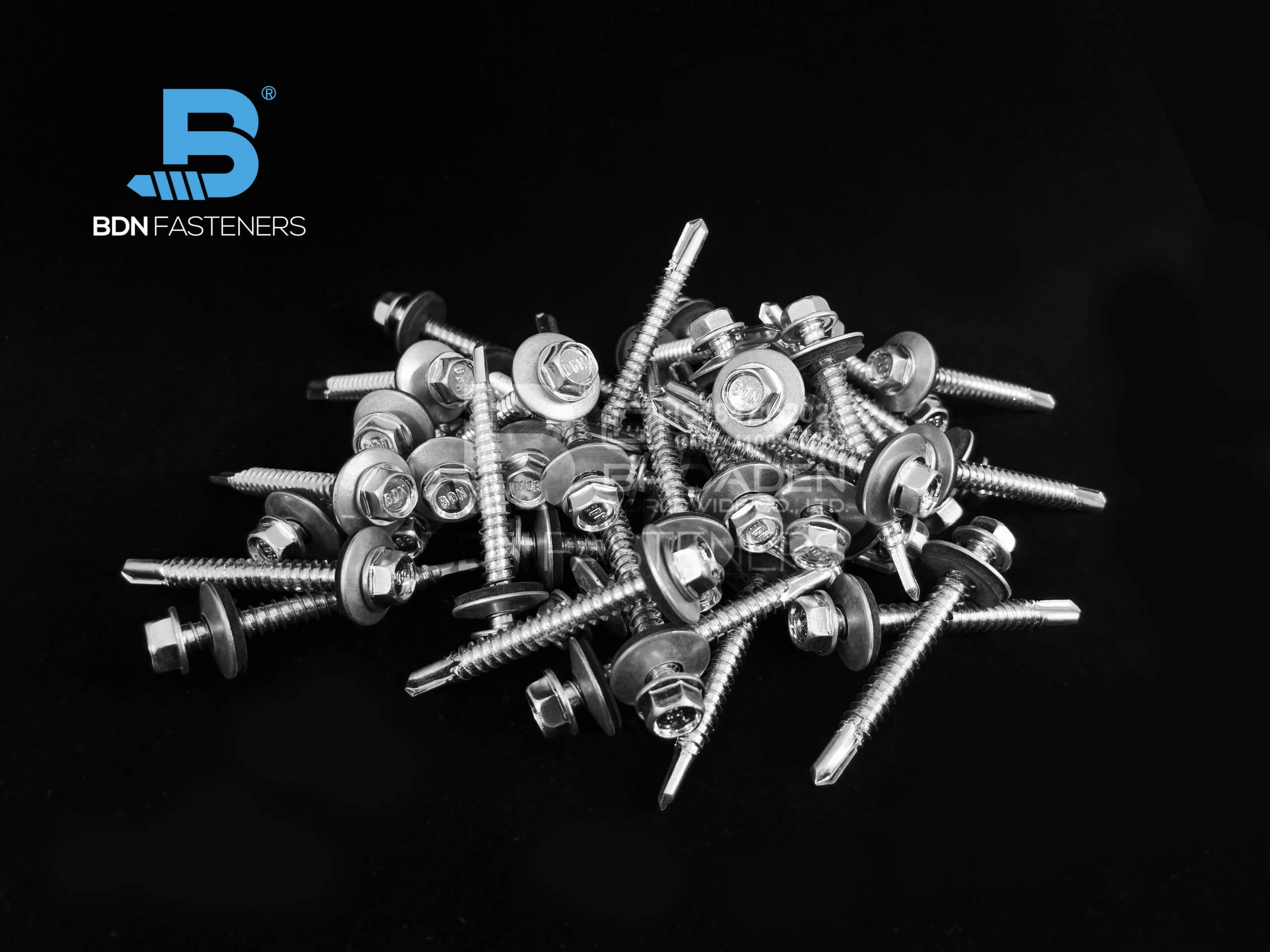
Zinc plating, when used on fasteners, in context means electroplated zinc followed by a passivation process (clear, yellow, etc…), which is a Chromate Conversion and will convert the metal surface into a complex mixture of Chromium compounds which will oxidize into a barrier layer, which provides corrosion resistance and wear protection when coupled with zinc. Though nowadays, for the benefit of superior corrosion resistance, better paint adhesion to metal surfaces, and compliance with environmental regulations such as (RoHS, REACH); Trivalent Chromium (Cr3+) or Chromium-Free Passivation (CFP) is used in place of the traditional Hexavalent Chromium (Cr6+) process.
Zinc-plated screws are widely adopted in the market because they are commonly perceived as a low-cost solution that provides adequate corrosion protection for low-to-moderate exposure environments.
The zinc acts sacrificially: it preferentially corrodes to protect the underlying steel. In the specific context of self-drilling screws used in buildings, external exposure is often the breaking point: once the zinc is consumed—especially at sharp edges, under the head, or at damaged points—the base steel rusts rapidly. One of the key boundaries of Zinc plated screws is that coatings below 12 μm should be limited to internal, dry areas. Outdoor exposure, especially near marine salts, industrial pollutants, or frequent condensation cycles, thin electroplated zinc can be consumed quickly. Once consumed, corrosion accelerates at the steel substrate, leading to red rust, staining, and eventual performance risk.
Hydrogen embrittlement is also a risk to factor in, as electroplating processes often involve acid cleaning and hydrogen evolution, creating potential for hydrogen embrittlement. Self-Drilling screws made from carbon steel all go through case-hardening and can be susceptible if process controls (de-embrittlement where applicable) are poor.
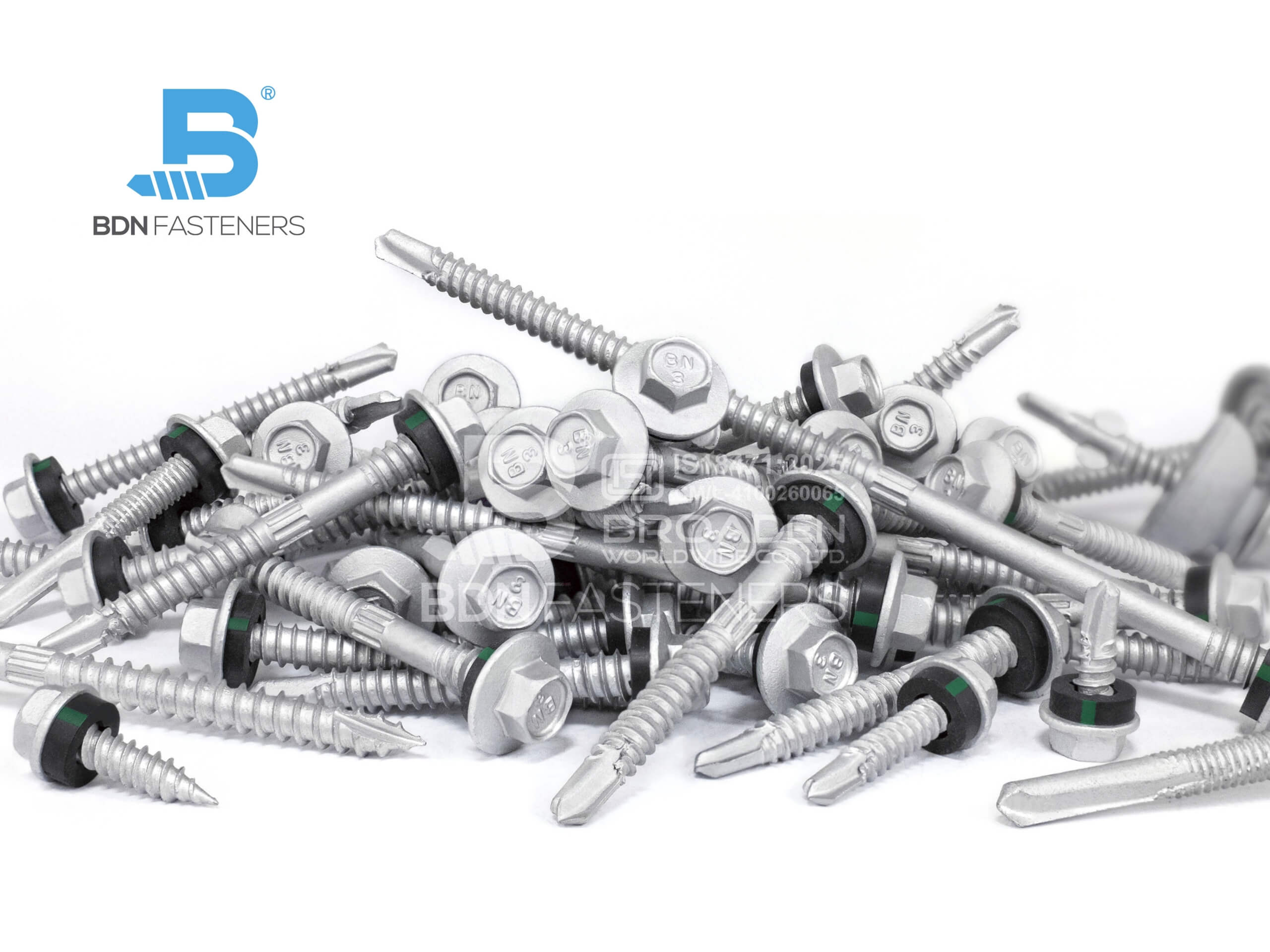
At BDN Fasteners, we have created a solution in the form of BN3 Ruspert coating. In the building fastener world, “Ruspert” usually refers to a family of high corrosion-resistant zinc-aluminum flake systems with salt-spray performance depending on layer thickness between the 500–1500 hour range or higher for specific environments. BN3 is formulated to withstand at least 1000 hours salt spray (AS 2331.3.1) and Kesternich cycles (a corrosive gas test) – a high-performance exterior category specifically for roofing, cladding, and polycarbonate roofing fasteners for long service life and reduced callbacks.
| Feature / Criteria | Zinc Plating (Electroplated Zinc) | BDN Fasteners Ruspert Coating |
| Primary Function | Basic sacrificial corrosion protection | High-performance corrosion-resistant system |
| Typical Use | Internal, dry environments | External, weather-exposed environments |
| Corrosion Resistance | Low to moderate | Very high |
| Salt Spray Performance | Limited | Up to 1000 hours |
| Kesternich (SO₂) Resistance | Not suitable | Designed for cyclic acidic exposure |
| Coating Structure | Single zinc layer with passivation | Multi-layer zinc-aluminium flake + topcoats |
| Durability After Installation | Coating easily worn during drilling | Retains protection after installation |
| Visual Appearance | Bright / silver | Matte grey |
| Relative Cost | Economical | Premium |
| Recommended Service Life | Short to medium (indoor) | Long-term (outdoor) |
Choose conventional zinc plating when:
- The application is strictly internal
- Exposure to moisture is minimal or controlled
- Cost efficiency is the primary concern
- Short-to-medium service life is acceptable
Choose BDN Fasteners Ruspert coating :
- The application is external or weather-exposed
- Long-term corrosion resistance is required
- The environment includes salt, condensation, or pollutants
- Performance, reliability, and durability outweigh initial cost
Zinc plating remains an excellent, economical solution for the right environment. The problem is not the chemistry; it is the expectation gap. In building exteriors—roofing, cladding, and other assemblies where water, salts, and cyclic wetting are normal—electroplated zinc is commonly asked to do a job it was never meant to do at typical thicknesses.